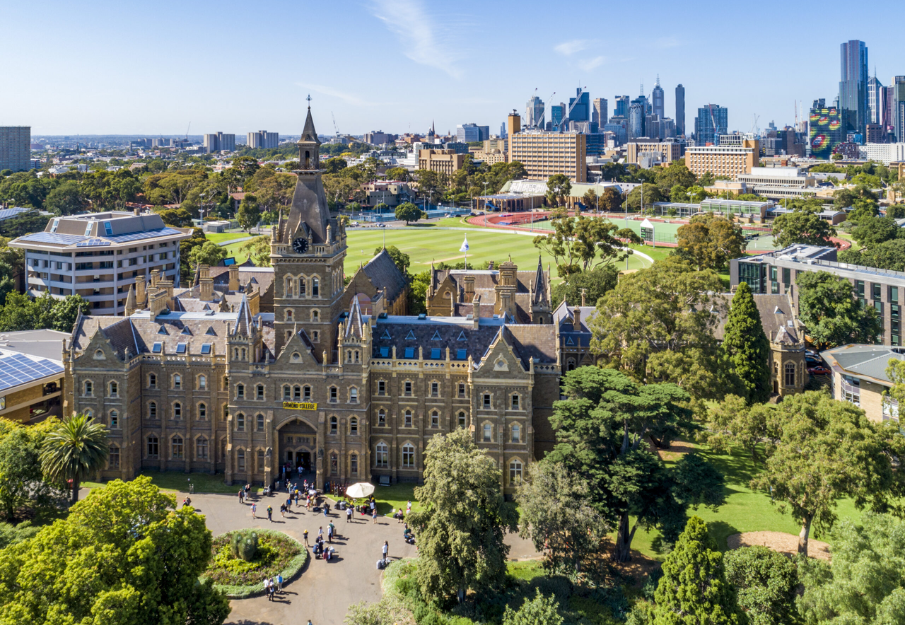
 The University of Melbourne functions as one of the more consequential institutional nodes in Australian political life, primarily through two channels: direct alumni who became senior political figures, and structural sponsorship of policy infrastructure — most notably the Grattan Institute.
On the alumni side, the university's political weight is heaviest at the historical end: three prime ministers (Menzies, Holt, Deakin) and one more recent (Gillard) studied there, giving it a claim to producing more PMs than most other Australian universities. Its contemporary influence runs more through the Liberal Party's Victorian bench — Dan Tehan, James Paterson and Alan Tudge all passed through federal cabinet or shadow cabinet in the 2016–2026 period, with Paterson in particular carrying a direct pipeline from the Institute of Public Affairs (a separate, ideologically distinct think tank) into the Senate.
The Grattan Institute connection is structurally different and arguably more durable: it isn't an alumni relationship but an institutional one, with UoM as a founding funder alongside the federal and Victorian governments and BHP, and with a former UoM Vice-Chancellor (Glyn Davis) as co-founder. Grattan's reports are widely credited with shaping federal and state policy on tax, housing, education and health regardless of which party holds government, which makes the university's endowment relationship to it a meaningful (if indirect) channel of political influence — separate from, and less partisan than, its direct alumni.